
What are the national standards for ozone detectors?
What are the national standards for ozone detectors?
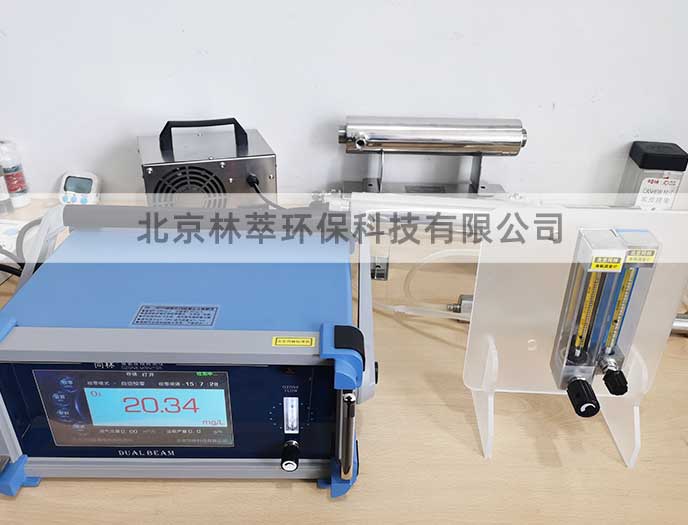
With the tightening of environmental protection policies and the enhancement of health awareness, the demand for ozone detectors in industrial safety, environmental monitoring and household scenarios has soared. To ensure the accuracy and compliance of equipment, the state has updated a number of national standards. The core standards of include :
I. Chinese National Standard (Mandatory/Recommended)
Youdaoplaceholder0 1.GB/T 18883-2025 Indoor air quality standard
Youdaoplaceholder0 Core content :
Ozone concentration limit: 1-hour average ≤0.16mg/m³ (approximately 0.08ppm).
Requirements for the testing instrument: accuracy ±5%, range 0-0.5ppm.
Youdaoplaceholder0 applicable scenarios : air quality monitoring in homes, offices and public places.
2.GB 12358-2023 "Ozone Detection and Alarm Instrument for Workplaces"
Youdaoplaceholder0 Core content :
Ozone safety threshold for industrial scenarios: 8-hour average ≤0.1ppm, short-term exposure ≤0.3ppm.
Instrument requirements: Explosion-proof certification, sound and light alarm, error ≤±3%.
Youdaoplaceholder0 applicable scenarios : industrial environments such as chemical engineering, printing, water treatment, etc.
3.GB/T 37820-2025 Technical specification for electrochemical Ozone detector
Youdaoplaceholder0 Core content :
The sensor life is no less than 2 years, and the calibration cycle is no more than 6 months.
Data storage ≥ 10,000 entries, supporting Bluetooth /WiFi transmission.
Ii. Youdaoplaceholder0 Environmental Protection and Industry Standards
Youdaoplaceholder0 1.HJ 590-2024 Technical Specification for Automatic Monitoring of Ozone in Ambient air
Youdaoplaceholder0 Core content :
The ultraviolet absorption method is used as the reference method, with a resolution of ≤0.001ppm.
It should have the function of temperature/humidity compensation.
Youdaoplaceholder0 2.JB/T 12955-2025 General Specification for Ozone Detectors for industrial use
Youdaoplaceholder0 Core content :
Dust and water resistance grade ≥IP65, response time ≤15 seconds.
Supports multi-gas module expansion (such as VOCs, CO₂).
Iii. Youdaoplaceholder0 International standard reference
Youdaoplaceholder0 1. ISO 16000-38:2025 "indoor air - methods for ozone detection"
The ultraviolet light absorption method is required, with an error within ±2%.
Youdaoplaceholder0 2.EPA 40 CFR Part 50 (EPA) : Certification standard for ozone monitoring equipment.
Iv. Dynamics of New Standards Added in 2025
Youdaoplaceholder0 Intelligent Internet of Things requirements : Add data encryption and remote calibration protocols (such as GB/T 2025-xxxx).
Youdaoplaceholder0 Green manufacturing standards : energy consumption and material recovery rate limits in the production process (e.g. HJ 1102-2025).
V. Selection and Compliance Advice
Youdaoplaceholder0 priority matching scenario :
For home use, choose GB/T 18883-2025 certified model.
Industrial selection GB 12358-2023 + explosion-proof certification (e.g. Ex ib IIB T4).
Youdaoplaceholder0 Verification mark : Check the "CMA" or "CNAS" test report number on the product nameplate.
Youdaoplaceholder0 Local requirements : In regions such as the Beijing-tianjin-hebei area and the Yangtze River delta, additional regional environmental protection standards (such as AQI linked alarm) may be added.
Appendix: A Guide to Avoiding Pitfalls
❗ beware of "conforming to old national standards" (such as GB/T 18883-2002 which has been abolished).
❗ international brands need to confirm the Chinese localization certification (such as CCC compulsory certification) additionally.
 Ozone and Indoor Air Quality:
 Comparing Ozone Measurement Te
How to Install a Dissolved Ozo
Comparing Ozone Measurement Te
How to Install a Dissolved Ozo
 Common Myths About Ozone Detec