
Ozone Safety in the Workplace: Monitoring Requirements and Best Practices
Ozone Safety in the Workplace: Monitoring Requirements and Best Practices
Ozone (O₃) is a powerful oxidizing agent widely used in water treatment, food processing, semiconductor manufacturing, and many other industries. While its industrial applications are invaluable, ozone also poses serious health risks when workers are exposed to elevated concentrations. Ensuring ozone safety in the workplace is not just a regulatory obligation—it is a moral imperative that protects your most valuable asset: your employees.
In this guide, we break down the regulatory requirements for ozone monitoring, the health effects of ozone exposure, and the best practices every facility should implement to maintain a safe working environment.
Why Ozone Workplace Safety Matters
Ozone is a colorless gas with a sharp, distinctive odor at low concentrations. At higher levels, it can cause significant respiratory damage even before workers are aware of the danger. According to the Occupational Safety and Health Administration (OSHA), the permissible exposure limit (PEL) for ozone is just 0.1 ppm (parts per million) as an 8-hour time-weighted average.
Exceeding this limit—even briefly—can lead to acute and chronic health effects. That is why continuous monitoring with a reliable gas-phase ozone detector is essential in any environment where ozone is generated or used.
Health Effects of Ozone Exposure
Understanding the health impact of ozone exposure helps reinforce why monitoring is critical. The severity of symptoms depends on both the concentration and the duration of exposure.
Short-Term (Acute) Effects
- Respiratory irritation — coughing, throat dryness, and chest tightness
- Reduced lung function — difficulty breathing, especially during physical exertion
- Eye and nose irritation — burning sensation, watery eyes
- Headaches and fatigue — even at concentrations slightly above 0.1 ppm
Long-Term (Chronic) Effects
- Permanent lung damage — repeated exposure can scar lung tissue
- Increased susceptibility to respiratory infections
- Asthma aggravation — ozone is a known trigger for asthma attacks
- Potential cardiovascular effects — emerging research links chronic ozone exposure to heart disease
The U.S. Environmental Protection Agency (EPA) classifies ozone as a criteria air pollutant, and the World Health Organization (WHO) has published guidelines recommending even lower exposure limits for the general population.
Regulatory Requirements for Ozone Monitoring
Different countries and agencies have established their own ozone exposure limits. Here is a comparison of the most commonly referenced standards:
| Agency / Standard | Exposure Limit | Averaging Period |
|---|---|---|
| OSHA PEL | 0.1 ppm | 8-hour TWA |
| NIOSH REL | 0.1 ppm | 8-hour TWA |
| ACGIH TLV | 0.05 ppm (heavy work) | 8-hour TWA |
| ACGIH TLV | 0.08 ppm (moderate work) | 8-hour TWA |
| ACGIH TLV | 0.1 ppm (light work) | 8-hour TWA |
| EU Directive | 0.05 ppm | 8-hour TWA |
Note that the ACGIH threshold varies based on the physical intensity of the work. Facilities where employees perform heavy labor should aim for even stricter monitoring thresholds.
Essential Components of an Ozone Safety Program
1. Continuous Ambient Ozone Monitoring
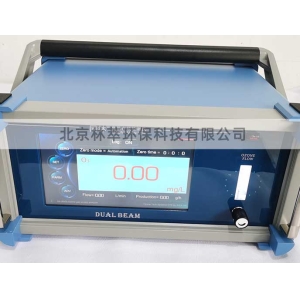
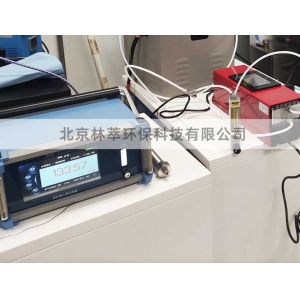
The foundation of any ozone safety program is real-time monitoring. Fixed ozone detectors should be installed in areas where ozone is generated, applied, or could accumulate. For facilities with water treatment processes, a dissolved ozone monitor is equally important to track residual ozone in process water.
Key monitoring considerations include:
- Sensor placement — install detectors at breathing height and near potential leak points
- Alarm thresholds — set visual and audible alarms at 0.05 ppm (warning) and 0.1 ppm (evacuation)
- Data logging — maintain exposure records for regulatory compliance
- Sensor calibration — follow manufacturer recommendations, typically every 6–12 months
2. Personal Protective Equipment (PPE)
When engineering controls and monitoring cannot guarantee safe exposure levels, PPE becomes necessary:
- Respiratory protection — approved gas masks with ozone-specific cartridges
- Ventilation — local exhaust ventilation at ozone generation points
- Enclosures — sealed ozone generation rooms with negative pressure
3. Emergency Response Procedures
Every facility must have documented emergency procedures for ozone exposure incidents:
- Immediate evacuation protocols when alarms trigger
- Designated assembly points upwind from the facility
- First-aid procedures for ozone inhalation (move to fresh air, seek medical attention)
- Incident reporting and root-cause analysis
4. Employee Training and Awareness
Workers must understand the hazards of ozone and how to respond:
- Annual safety training covering ozone properties, health effects, and exposure limits
- Proper use and reading of ozone monitoring equipment
- Recognition of ozone's characteristic odor as a warning sign
- Understanding that odor fatigue can occur—smell alone is not a reliable indicator
Best Practices for Ozone Monitoring in the Workplace
Beyond regulatory compliance, following these best practices will help your facility maintain the highest safety standards:
- Implement a layered monitoring strategy — combine fixed ambient monitors with portable detectors for maximum coverage
- Integrate with building automation — connect ozone detectors to HVAC systems for automatic ventilation response
- Conduct regular area surveys — use portable instruments to map ozone concentration profiles across the facility
- Maintain comprehensive records — document monitoring data, calibration logs, and incident reports for audits
- Review and update safety protocols annually — regulations and industry standards evolve; your procedures should too
- Design for safety first — when planning new ozone systems, engage safety professionals early in the design process; request a quotation for ozone monitoring solutions tailored to your facility
Common Mistakes in Ozone Workplace Safety
Even experienced facilities can fall into these traps:
- Relying on smell alone — olfactory fatigue makes odor an unreliable safety indicator
- Ignoring low-level exposure — chronic exposure below the PEL can still cause health issues over time
- Placing detectors incorrectly — ozone is heavier than air and can accumulate near the floor in enclosed spaces
- Neglecting calibration — uncalibrated sensors give false readings, creating a dangerous false sense of security
- Inadequate ventilation — even small ozone generators can produce dangerous concentrations in poorly ventilated areas
Conclusion
Ozone safety in the workplace is a multifaceted challenge that requires continuous vigilance, proper equipment, and well-trained personnel. By implementing robust monitoring systems, adhering to regulatory requirements, and following industry best practices, you can protect your workers and maintain compliance.
Whether you are setting up a new ozone system or upgrading your existing safety infrastructure, choosing the right monitoring equipment is the first and most critical step. Explore our range of gas-phase ozone monitors and dissolved ozone monitoring solutions to find the right fit for your facility's safety requirements.
 Why Does an Ozone Analyzer Nee
 UV Ozone Analyzers in Semicond
 How Often Should You Calibrate
 Ozone Monitoring in Cleanroom