
Ozone Monitoring in Water Treatment: A Comprehensive Guide
Ozone Monitoring in Water Treatment: A Comprehensive Guide
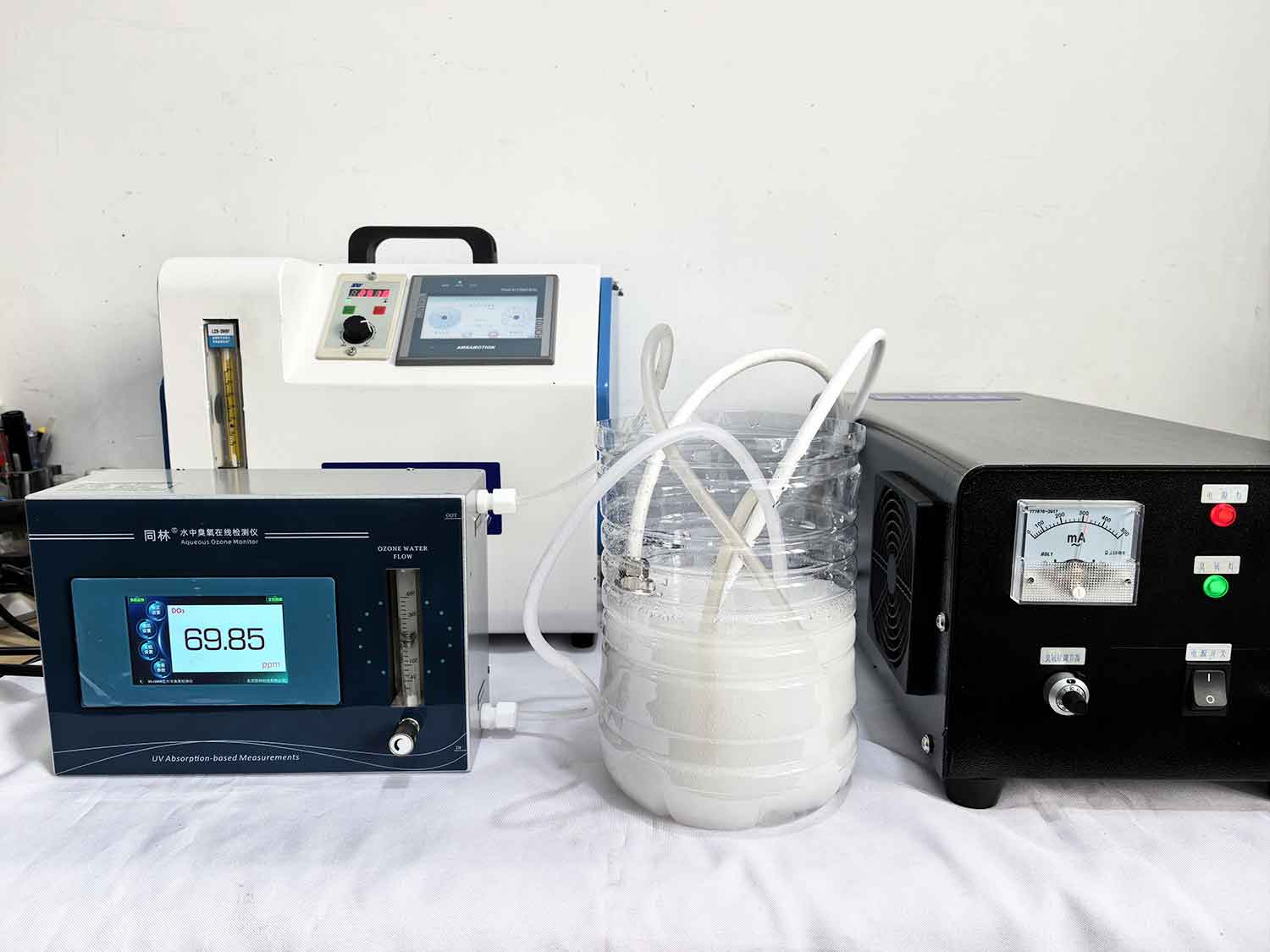
Ozone has become one of the most powerful oxidizing agents used in modern water treatment. From municipal drinking water plants to pharmaceutical purification systems and industrial process loops, ozone delivers effective disinfection, decolorization, and oxidation without leaving harmful chemical residues. But harnessing the full power of ozone—and avoiding its risks—depends on one critical capability: accurate, real-time ozone monitoring in water.
This guide explains how ozone is applied in water treatment, why dissolved ozone monitoring is essential, which measurement technologies are used, and how to design a monitoring strategy that keeps your process efficient, safe, and compliant.
Why Ozone Is Used in Water Treatment
Compared to traditional disinfectants like chlorine, ozone offers several distinct advantages:
- Powerful oxidation — ozone has an oxidation potential of 2.07 V, second only to fluorine among common water-treatment chemicals
- Broad-spectrum disinfection — it inactivates bacteria, viruses, and chlorine-resistant protozoa such as Cryptosporidium and Giardia
- No harmful residuals — ozone decomposes back to oxygen, leaving no taste or chemical by-products in finished water
- Effective micropollutant removal — it breaks down pharmaceuticals, pesticides, and endocrine-disrupting compounds that survive conventional treatment
- Improved coagulation and decolorization — pretreatment with ozone can reduce turbidity and remove color-causing compounds
According to the U.S. Environmental Protection Agency (EPA), ozone is recognized as an effective primary disinfectant when properly controlled, and is used in thousands of municipal water treatment plants worldwide.
The Importance of Dissolved Ozone Monitoring
Because ozone is a reactive, unstable gas with a half-life of only a few minutes in water, controlling its concentration is far more challenging than with traditional chlorine dosing. This is where a dissolved ozone monitor becomes indispensable.
Continuous monitoring of dissolved ozone concentration enables operators to:
- Maintain disinfection efficacy — ensure CT (concentration × time) values meet regulatory disinfection targets
- Optimize ozone generation — avoid over-dosing that wastes energy and risks bromate formation
- Prevent corrosion and damage — control residual ozone that can degrade downstream equipment
- Protect product quality — especially critical in pharmaceutical, food & beverage, and semiconductor rinse water applications
Where Dissolved Ozone Monitoring Points Are Installed
A well-designed ozone treatment system typically includes monitoring at multiple points along the process train:
1. Ozone Generator Output
Before the ozone is dissolved into water, the gas-phase ozone concentration should be measured. This is typically done with a gas ozone analyzer installed on the generator output line, allowing operators to verify ozone production and adjust generator power.
2. Contactor Effluent (Treated Water Leaving the Ozone Contactor)
This is the most critical monitoring point. The dissolved ozone concentration immediately after the contactor determines whether disinfection targets have been met. Target values are typically 0.1–0.5 mg/L for municipal water, depending on flow and contact time.
3. Pre-RO / Pre-Filtration Points
For systems using reverse osmosis or membrane filtration downstream of ozonation, residual ozone must be measured to confirm destruction before reaching sensitive membranes. Even trace amounts of ozone will damage RO membranes.
4. Finished Water (Before Distribution)
Final monitoring confirms that residual ozone levels are within specifications, and in many plants a low-level residual is maintained through the distribution system for secondary disinfection.
Common Dissolved Ozone Measurement Technologies
Several sensor technologies are available, each with its own strengths and limitations.
Membrane-Amperometric Sensors
The most widely used method for continuous dissolved ozone monitoring. These sensors use a gas-permeable membrane that allows ozone to diffuse into an electrochemical cell, where it is reduced at the cathode to produce a current proportional to the ozone concentration.
- Pros — high accuracy, real-time response, low maintenance, suitable for online monitoring
- Cons — membrane replacement every 6–12 months, sensitive to flow variations
UV Absorption Sensors
Ozone strongly absorbs UV light at 254 nm. UV sensors measure the absorbance of a water sample to calculate dissolved ozone concentration directly, without consuming the ozone in the measurement.
- Pros — non-consumptive, very stable, low drift, excellent for high-purity applications
- Cons — higher initial cost, requires clean sample lines to avoid fouling
UV-based sensors are particularly popular in pharmaceutical and semiconductor water systems where measurement accuracy and stability are critical.
Colorimetric (Indigo) Method
A reference method based on the decolorization of indigo trisulfonate by ozone. Used primarily for laboratory verification and DPD-style spot checks.
- Pros — high accuracy, established reference standard
- Cons — not suitable for continuous online monitoring, requires reagents
Key Specifications When Choosing a Dissolved Ozone Monitor
Selecting the right instrument depends on your application. The following parameters matter most:
- Measurement range — typically 0–5 mg/L for most water-treatment applications; up to 20 mg/L for high-concentration process loops
- Response time (T90) — the time to reach 90% of final value; faster is better for closed-loop control, typically 30 seconds or less
- Accuracy and repeatability — ±1% of full scale is standard for industrial-grade sensors
- Temperature compensation — built-in temperature sensors are essential because ozone solubility varies with temperature
- Pressure tolerance — for pressurized systems, verify the sensor is rated for your line pressure
- Output signals — 4–20 mA, Modbus, and Profibus are common for integration with SCADA/PLC systems
- Maintenance requirements — membrane replacement intervals, electrolyte replenishment, and cleaning frequency
Common Challenges in Ozone Water Monitoring
Even with the right equipment, operators face real-world measurement difficulties:
Bubbles and Flow Variations
Undissolved gas bubbles in the sample stream cause erratic readings. Use a flow-through cell with adequate backpressure and bubble-trap design.
Sensor Fouling
Iron, manganese, and biofilm can coat the membrane and cause low readings. Routine cleaning and calibration are essential.
Zero Drift
Amperometric sensors slowly lose sensitivity between calibrations. A regular calibration schedule—typically every 30–90 days—keeps readings within tolerance.
Interferences
Chlorine, chlorine dioxide, and hydrogen peroxide can cross-react with some sensor designs. For plants using multiple oxidants, select a sensor with proven selectivity for ozone.
Best Practices for Reliable Ozone Monitoring
Follow these recommendations to maximize measurement reliability:
- Install sensors in accessible locations with proper bypass loops for calibration and maintenance
- Use a flow switch to alarm when sample flow falls outside the specified range
- Perform routine air-calibration (zero) and chemical calibration (span) at scheduled intervals
- Keep spare membranes and electrolytes on hand to minimize downtime
- Log all calibration data for regulatory traceability—many plants must comply with OSHA recordkeeping and EPA audit requirements
Regulatory and Safety Considerations
Ozone monitoring is not just a process optimization tool—it is often a regulatory requirement. Municipal drinking water systems in the U.S. must comply with EPA disinfection requirements, and the World Health Organization (WHO) publishes guidelines for ozone use in drinking-water treatment.
Beyond the water itself, off-gas from the ozone contactor must also be monitored to protect workers. The OSHA permissible exposure limit for gaseous ozone is just 0.1 ppm (8-hour TWA), so a redundant gas-phase ozone detector should be installed in the contactor room to trigger ventilation and alarms.
Conclusion
Effective ozone monitoring in water treatment is the foundation of a safe, efficient, and compliant ozonation system. By understanding the application requirements, choosing the right sensor technology, and following best practices for installation and maintenance, operators can ensure that every drop of water leaving the plant meets quality standards.
Whether you are designing a new ozone system or upgrading an existing one, the right dissolved ozone monitor makes all the difference. Contact our team for a tailored ozone monitoring solution that matches your facility's specific needs.
 Ozone and Indoor Air Quality:
 Comparing Ozone Measurement Te
How to Install a Dissolved Ozo
Comparing Ozone Measurement Te
How to Install a Dissolved Ozo
 Common Myths About Ozone Detec