
Why Semiconductor Fabs Need Precision Ozone Analyzers
Why Semiconductor Fabs Need Precision Ozone Analyzers
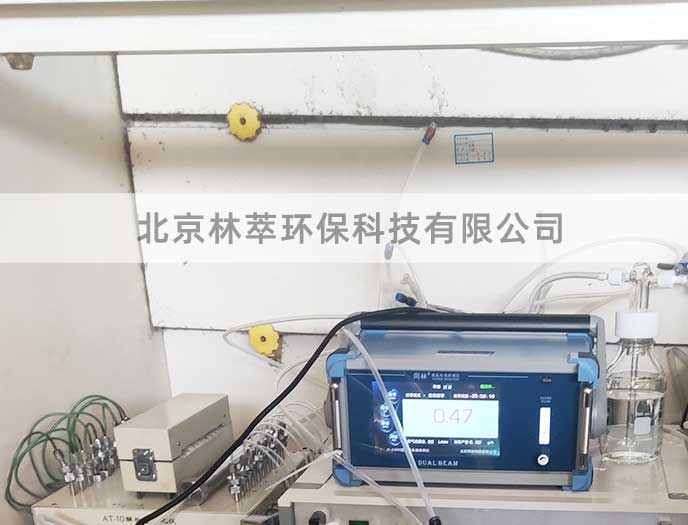
Semiconductor manufacturing is one of the most demanding industries in the world, and the tools used inside a fab must meet exceptionally tight tolerances. Among the process gases fabs rely on, ozone (O₃) plays a quietly critical role in wafer cleaning, surface preparation, and atomic layer deposition. Because ozone is both reactive and hazardous, semiconductor fabs cannot treat it as just another utility gas — they need precision ozone analyzers capable of measuring concentrations at parts-per-billion (ppb) levels with sub-second response times.
This article explains why ozone monitoring is essential in semiconductor fabrication, the unique challenges fabs face, and what to look for when selecting an ozone analyzer for cleanroom or tool-side applications.
The Role of Ozone in Semiconductor Manufacturing
Ozone is widely used across the semiconductor process flow, particularly in front-end-of-line (FEOL) operations. Its strong oxidizing power removes organic contaminants, grows ultra-thin oxide layers, and passivates silicon surfaces without high-temperature steps.
Wafer Cleaning and Surface Preparation
Before deposition or photolithography, wafers must be free of organic residues. Ozone dissolved in ultra-pure water (UPW) — often paired with dilute HF in SCROD or IMEC-clean — produces a powerful, particle-free cleaning chemistry. A 1–2 ppm dissolved ozone concentration is typical, and process engineers rely on continuous dissolved ozone monitoring to keep dose and exposure time within the validated window.
Atomic Layer Deposition (ALD)
In ALD reactors that use ozone as the oxygen source — particularly for high-k stacks like Al₂O₃, HfO₂, and ZrO₂ — ozone partial pressure is a critical process variable. Variations of just a few percent in delivered O₃ concentration change film stoichiometry, growth rate per cycle, and uniformity across a 300 mm wafer.
Photoresist Stripping and Asher Processes
Downstream asher tools generate ozone as a byproduct. Excessive ozone leakage into the load lock or transfer chamber can corrode components, contaminate wafers, and create safety hazards for service technicians.
Why Precision Matters: The Semiconductor Quality Equation
In a fab, every parameter has a yield, performance, and reliability cost when it drifts. For ozone, poor measurement or control shows up as reduced die yield, increased defect density, and shortened device lifetime.
Process Repeatability
Modern semiconductor processes are designed to be repeatable at the atomic scale. A UV ozone analyzer with ±1% reading accuracy gives process engineers a trustworthy signal they can use to adjust setpoints, qualify new ozone generator cartridges, and trend generator health. A monitor that drifts by 5% over six months will quietly push tool recipes out of spec long before anyone notices from yield data.
Wafer Yield and Defectivity
Under-dosed ozone in cleaning baths leaves residual organics that interfere with subsequent deposition or etch steps. Over-dosed ozone can damage sensitive metal or dielectric films. Either direction of error translates directly into lower yield — measured in dollars per wafer per percentage point.
Tool Qualification and Auditing
Fabs run regular tool qualification using SPC on critical gas concentrations. The ozone analyzer must be backed by a traceable calibration certificate, low drift, and clear documentation of measurement uncertainty — requirements that exclude most general-purpose industrial detectors.
Unique Challenges of Measuring Ozone in Fabs
Ozone is one of the more difficult gases to measure accurately, and semiconductor environments add layers of complexity that go beyond what most industrial monitoring systems are designed to handle.
Low Concentrations in a Clean Background
ALD and cleaning processes typically operate between 50 g/m³ and 300 g/m³ of ozone in the gas phase (roughly 25,000–150,000 ppm by partial pressure in the reactor), but the more demanding measurement is often at the ppb level — for example, monitoring chamber exhaust for breakthrough, or verifying that ambient cleanroom ozone stays below 2 ppb to protect lithography optics. UV absorption analyzers are uniquely well-suited to this wide dynamic range, which is why they dominate the semiconductor market.
Wet, Corrosive, and High-Purity Environments
Sample lines that carry wet ozone — even with moisture traps — degrade quickly. Stainless steel, PTFE-lined tubing, and ozone-resistant fittings are mandatory. The analyzer itself must use wetted materials that do not outgas or shed particles, since any contamination entering the sample path can skew both the measurement and, worse, the process it is meant to support.
Fast Response for Closed-Loop Control
Many fab applications use the ozone analyzer in a closed feedback loop with the generator or mass flow controller. For that to work, the analyzer needs a T90 response time of 1 second or less. Slower instruments introduce lag that drives the process into oscillation rather than holding it at setpoint.
UV Absorption vs Electrochemical: Which Technology for Fabs?
There are two dominant sensor technologies in the ozone analyzer market: UV absorption and electrochemical (EC). They are not interchangeable in fab applications.
| Parameter | UV Absorption Analyzer | Electrochemical Sensor |
|---|---|---|
| Measurement principle | Beer-Lambert absorption at 254 nm | Chemical reaction at electrode |
| Range | ppb to percent levels | Typically 0–10 ppm |
| Response time (T90) | < 1 second | 15–60 seconds |
| Drift | Very low (NIST-traceable) | Moderate; cross-sensitive to other gases |
| Calibration interval | 6–12 months | 1–3 months |
| Best fit for fabs | Tool-side, exhaust, ambient | Personal safety, area monitoring |
For semiconductor process control, UV absorption is the clear choice. For fab-wide worker safety and area monitoring — where the goal is to alarm on leaks rather than to control a recipe — electrochemical monitors are often used as a cost-effective complement. Many fabs deploy both, with the UV analyzer on the tool and EC monitors distributed throughout the subfab and gas-room.
Key Specifications to Look for in a Fab-Grade Ozone Analyzer
Not all UV ozone analyzers meet semiconductor requirements. When evaluating instruments for a fab deployment, prioritize the following specifications:
- Detection limit: 1 ppb or better for ambient and exhaust monitoring
- Accuracy: ±1% of reading (not just ±1% of full scale)
- Response time: T90 ≤ 1 second for closed-loop control
- Pressure and temperature compensation: built-in, with documented algorithms
- Communication interfaces: Ethernet/IP, Modbus TCP, or analog 4–20 mA for direct PLC integration
- Cleanroom-compatible enclosure: stainless steel or powder-coated metal, no plasticizers or outgassing components
- Calibration traceability: NIST- or NPL-traceable certificate included with the instrument
- Service interval: lamp life ≥ 12 months, with field-replaceable components
For broader facility safety — including gas rooms, scrubber exhaust, and loading dock areas — our gas-phase ozone monitors provide area coverage with relay outputs that can be tied into the fab's building management system. Engineers configuring new fab tools or evaluating quotations for monitoring upgrades can also review the available product specifications and citation resources.
Common Mistakes When Sourcing Ozone Analyzers for Fabs
Three pitfalls appear again and again when fabs specify ozone analyzers:
Choosing an Industrial Monitor Instead of a Semiconductor-Grade Instrument
General-purpose industrial ozone detectors are designed for occupational safety, with ranges of 0–10 ppm and slow response. They will "see" ozone, but they will not give the precision or speed needed for process control. Specifying a true semiconductor-grade UV analyzer from the start avoids expensive retrofits later.
Ignoring Sample Line Materials
Even an excellent analyzer gives poor results if the sample line degrades ozone before it reaches the cell. Use 316L stainless steel electropolished tubing, minimize run length, and keep the sample line heated and insulated when ambient swings are large.
Underestimating Calibration Logistics
Calibration requires a reliable ozone source — typically an on-site generator with a transfer-standard photometer. Plan for this infrastructure before the analyzers arrive, and budget for annual recertification.
Regulatory and Safety Context
Beyond process performance, fabs must protect workers. The U.S. OSHA sets an ozone PEL of 0.1 ppm (8-hr TWA) and a short-term limit of 0.3 ppm. The U.S. EPA also regulates ozone as a criteria pollutant, with NAAQS that may apply to fab exhaust under site permits. A complete monitoring strategy should address both worker safety inside the facility and emission compliance at the boundary.
Building a Complete Ozone Monitoring Strategy for a Fab
A mature fab ozone monitoring program layers three tiers of measurement:
- Tool-side UV analyzers for closed-loop control on ALD, cleaning, and asher tools
- Subfab and gas-room monitors with relays for emergency ventilation and generator shutdown
- Boundary and ambient analyzers to verify exhaust treatment and maintain regulatory compliance
All three tiers should share a common data historian so process, safety, and emissions data can be correlated — and so the fab can demonstrate due diligence to auditors after an incident or community complaint.
Conclusion
Precision ozone analyzers are foundational to yield, safety, and compliance in modern semiconductor fabs. UV absorption analyzers with ppb-level detection and sub-second response have become the de facto standard for tool-side control, complemented by area monitors for worker protection and boundary analyzers for emission verification. Investing in the right instruments, sample systems, and calibration infrastructure pays back many times over in tighter process windows, higher wafer yield, and a stronger compliance posture.
For specifications and quotations, request our product catalog and application notes.
 Ozone and Indoor Air Quality:
 Comparing Ozone Measurement Te
How to Install a Dissolved Ozo
Comparing Ozone Measurement Te
How to Install a Dissolved Ozo
 Common Myths About Ozone Detec