
UV Absorption vs Electrochemical Ozone Sensors: A Technical Comparison
UV Absorption vs Electrochemical Ozone Sensors: A Technical Comparison
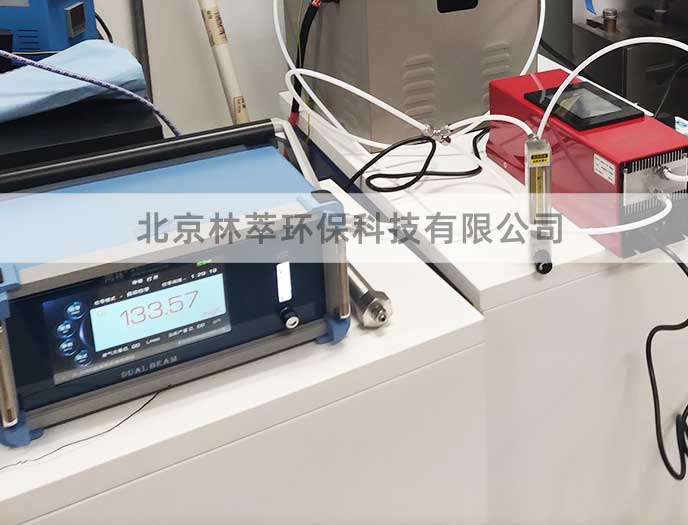
Choosing the right sensing technology is the single most important decision when specifying an ozone analyzer. Two technologies dominate the market: UV absorption and electrochemical (amperometric) sensors. Both can measure ozone accurately, but they work on fundamentally different physical principles, and the best choice depends entirely on your application, environment, and performance requirements.
This guide compares UV absorption and electrochemical ozone sensors across detection principle, accuracy, response time, maintenance, cost, and ideal use cases — helping you select the right technology for your ozone monitoring system. To explore specific products built on these principles, see our gas ozone monitor and dissolved ozone monitor product lines.
Why Sensor Technology Choice Matters
Ozone is a highly reactive, unstable molecule. It is also a strong oxidizer and a regulated workplace exposure hazard — the OSHA permissible exposure limit is just 0.1 ppm (8-hour TWA). Accurate detection is critical for:
- Process control — maintaining optimal ozone levels in water treatment, semiconductor cleaning, and food processing
- Safety monitoring — detecting leaks before concentrations reach hazardous levels
- Regulatory compliance — meeting environmental and occupational exposure limits
- Product quality — ensuring the right oxidation dose in pharmaceutical, beverage, and electronics manufacturing
Selecting the wrong sensor technology can lead to drift, false alarms, frequent recalibration, or undetected leaks. Understanding the strengths and weaknesses of each option is the first step to a reliable ozone monitoring system.
How UV Absorption Ozone Sensors Work
UV absorption is the most direct and physically absolute method of measuring ozone concentration. The principle exploits the strong absorption peak of ozone at 254 nm — the same wavelength used in low-pressure mercury lamps and UV germicidal irradiation.
Optical Principle
A UV light source emits a beam at 254 nm, which passes through a sample cell containing the gas (or dissolved ozone in water). A photodetector on the opposite side measures the light intensity. The reduction in intensity, governed by the Beer-Lambert law, is directly proportional to ozone concentration:
I = I₀ × 10-εcl
where I is the transmitted light, I₀ is the reference intensity, ε is the molar absorption coefficient of ozone, c is the concentration, and l is the path length.
Key Characteristics
- Non-consumptive — the measurement does not consume or alter the ozone sample
- Linear response — output is directly proportional to concentration across a wide range
- High stability — minimal drift, often less than 1% of reading per month
- Fast response — T90 response times typically under 10 seconds
- Absolute measurement — calibration can be verified with optical references, not just gases
How Electrochemical Ozone Sensors Work
Electrochemical (amperometric) sensors are the most widely deployed ozone detection technology, especially in portable and lower-cost instruments. They work on an entirely different principle: chemical reaction and current measurement.
Electrochemical Principle
The sensor contains two or three electrodes (working, counter, and reference) immersed in an electrolyte behind a gas-permeable membrane. Ozone diffuses through the membrane and is reduced at the working electrode, producing a small electrical current proportional to the ozone concentration:
O₃ + H₂O + 2e⁻ → O₂ + 2OH⁻
The current (typically in nanoamperes to microamperes) is measured and converted to a concentration reading.
Key Characteristics
- Consumptive — ozone is chemically consumed during measurement
- Lower cost — much smaller and cheaper than UV optical benches
- Compact — sensor cells can be only a few millimeters in size
- Battery friendly — low power consumption, ideal for portable detectors
- Limited selectivity — can be cross-sensitive to NO₂, Cl₂, and other oxidizing gases
Side-by-Side Comparison
The table below summarizes the key performance differences:
| Parameter | UV Absorption | Electrochemical |
|---|---|---|
| Measurement principle | Optical absorption at 254 nm | Electrochemical reduction |
| Accuracy | ±1% of full scale (high) | ±5–10% of full scale |
| Response time (T90) | 5–15 seconds | 30–90 seconds |
| Drift | Very low (<1%/month) | Moderate (5–10%/month) |
| Calibration interval | 6–12 months | 1–3 months |
| Lifetime | 5–10+ years | 1–3 years (sensor replacement) |
| Maintenance | Annual cleaning of optical cell | Membrane and electrolyte replacement |
| Cross-sensitivity | Negligible | Sensitive to NO₂, Cl₂, H₂O₂ |
| Power consumption | Higher (UV lamp) | Low (battery friendly) |
| Cost | Higher initial investment | Lower initial cost |
| Best for | Process control, compliance, lab-grade | Portable safety, spot checks, alarms |
Where UV Absorption Sensors Excel
UV absorption is the preferred choice for applications that demand the highest accuracy and stability.
Semiconductor and Cleanroom Monitoring
Semiconductor fabs operate at sub-ppb contamination levels, where even tiny ozone deviations can damage wafer yield. UV analyzers are the industry standard for in-situ gas-phase ozone monitoring during ALD, etching, and photoresist stripping processes.
Pharmaceutical Water Systems
Water-for-injection (WFI) and purified water loops require continuous monitoring of dissolved ozone used for sanitization. UV-based dissolved ozone monitors provide the long-term stability required by FDA and EU GMP validation.
Municipal Water Treatment
Large-scale drinking water plants use UV ozone analyzers for real-time process control of the ozone contactor. The non-consumptive measurement means the same sample can be returned to the process, reducing waste and operating cost.
Regulatory Compliance Monitoring
When measurement data may be used for regulatory reporting — for example, occupational exposure assessments or environmental emissions — UV instruments provide the audit trail and accuracy required by agencies like the U.S. Environmental Protection Agency.
Where Electrochemical Sensors Excel
Despite their limitations, electrochemical sensors are the right choice for many everyday ozone detection applications.
Workplace Safety and Personal Monitors
For ambient air monitoring in ozone generator rooms, water treatment plant contactor halls, and industrial facilities, electrochemical detectors provide cost-effective, reliable protection. Many OSHA-compliant portable gas detectors use electrochemical cells.
Portable and Handheld Devices
Low power consumption and compact form factor make electrochemical sensors the standard for battery-powered handheld ozone meters used by service technicians, indoor air quality inspectors, and food processing auditors.
Multi-Gas Detectors
Electrochemical ozone sensors integrate easily into multi-gas instruments that also measure H₂S, CO, Cl₂, and NO₂. This makes them a natural fit for personal safety monitors in chemical plants.
Budget-Conscious Installations
Where a low upfront cost is more important than long-term stability — for example, in non-critical leak detection or short-term pilot projects — electrochemical sensors deliver acceptable performance at a fraction of the cost.
Hybrid and Emerging Approaches
Modern ozone analyzers increasingly combine multiple sensing principles. For example, some gas ozone monitors pair a UV optical bench with an electrochemical cell for redundant safety alarming. In the dissolved ozone space, membrane-amperometric sensors (a type of electrochemical design) remain the dominant low-cost option, while UV-based instruments are preferred for high-purity applications.
Newer developments include:
- LED-based UV sensors that replace mercury lamps with solid-state deep-UV LEDs, reducing size and power
- Ceramic membrane sensors offering longer life than polymer membrane electrochemical cells
- NDIR and photoacoustic alternatives for niche applications where ozone-specific interferences must be eliminated
How to Choose the Right Technology for Your Application
Use this practical decision framework when specifying an ozone analyzer:
- What is the required accuracy? If you need ±1% or better for process control or regulatory reporting, choose UV absorption. For general safety alarming, electrochemical is typically sufficient.
- How often can you calibrate? If quarterly calibration is impractical, choose UV (longer calibration interval) or budget for electrochemical sensor replacement.
- Is the environment clean or dirty? Electrochemical sensors tolerate dust and humidity better; UV cells need clean, dry sample lines.
- What is the power budget? Battery-powered portable devices almost always use electrochemical sensors. Fixed online analyzers can easily accommodate UV.
- Are there cross-sensitive gases present? In environments with NO₂, Cl₂, or H₂O₂, UV absorption is significantly more selective.
- What is the total cost of ownership? UV instruments cost more upfront but less over a 5–10 year life. Electrochemical sensors have lower initial cost but higher ongoing consumable expense.
Conclusion
UV absorption and electrochemical ozone sensors each have well-defined strengths. UV absorption is the gold standard for accuracy, stability, and selectivity — ideal for process control, regulatory compliance, and cleanroom or high-purity water applications. Electrochemical sensors deliver compact, low-power, cost-effective detection — perfect for portable safety monitors, multi-gas detectors, and budget-sensitive installations.
Matching the sensor technology to your application, environment, and performance requirements is the key to a reliable, low-maintenance ozone monitoring system. For guidance on selecting the right instrument for your facility, request a tailored ozone monitoring quote from our engineering team.
 Ozone and Indoor Air Quality:
 Comparing Ozone Measurement Te
How to Install a Dissolved Ozo
Comparing Ozone Measurement Te
How to Install a Dissolved Ozo
 Common Myths About Ozone Detec