
How UV Ozone Analyzers Accurately Measure Ozone Concentration
I. Introduction: Why Use the UV Method for Ozone Measurement?
With the rapid development of ozone applications today, whether for performance calibration of laboratory ozone generators or ozone concentration control in industrial processes, measurement accuracy and response speed directly determine system reliability. Traditional electrochemical or iodometric methods, while having some reference value, suffer from issues like response lag, susceptibility to aging, and significant drift over long-term use.
The UV Ozone Analyzer utilizes the principle that ozone molecules have strong absorption characteristics at the wavelength of 254 nm, calculating the ozone concentration in the gas via the Beer-Lambert Law. This method requires no chemical reagents, has a fast response time (<1 second), and has become one of the international standard monitoring methods.
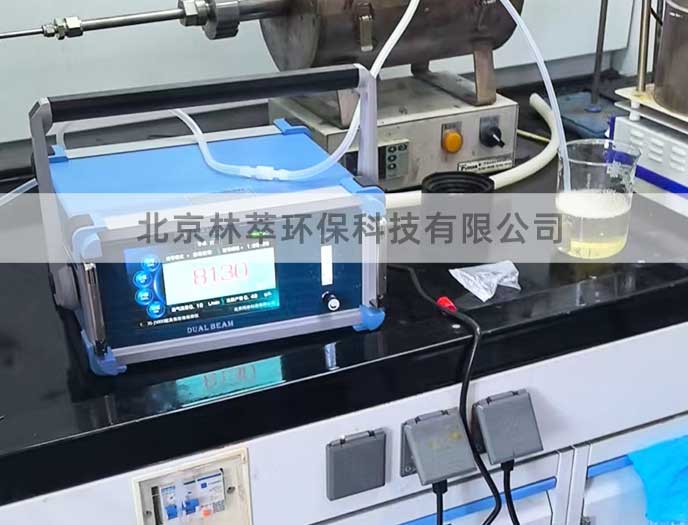
II. Detection Principle: Beer-Lambert Law Based on 254 nm UV Absorption
2.1 Absorption Characteristics
Ozone molecules have unique absorption peaks for ultraviolet light, with the most significant absorption located at the wavelength of 254 nm.
When ultraviolet light passes through gas containing ozone, some photons are absorbed, and the light intensity weakens. The analyzer measures the intensity difference between the transmitted light and the incident light to derive the ozone concentration.
2.2 Mathematical Expression
The measurement basis of the UV ozone analyzer is the Beer-Lambert Law:
I = I₀ × e^(-ε · C · L)
Where:
(I₀): Incident light intensity
(I): Transmitted light intensity
(ε): Absorption coefficient of ozone (approximately 308 cm⁻¹·atm⁻¹)
(C): Ozone concentration
(L): Optical path length (typically 10–100 cm)
By calculating the absorbance, the analyzer can display the concentration value (mg/m³ or ppm) in real-time.
III. Instrument Components: Optical System and Electronic Control Module
3.1 Optical System
A UV ozone analyzer typically includes the following core structures:
UV Light Source: Low-pressure mercury lamp or deuterium lamp, providing stable 254 nm radiation.
Gas Detection Cell: The channel through which ozone gas flows; the optical path length directly affects detection sensitivity.
Photodetector: Receives transmitted light and converts the optical signal into an electrical signal.
Reference Light Channel: Some instruments use a dual-beam design to compensate for light source fluctuation errors.
3.2 Signal and Control Section
The internal signals of the instrument are amplified and filtered, and then the concentration is calculated by a microprocessor. Output methods typically include:Analog Output: 4–20 mA current signal for connecting to PLCs.
Digital Output: RS485 or Modbus for remote communication and data acquisition.
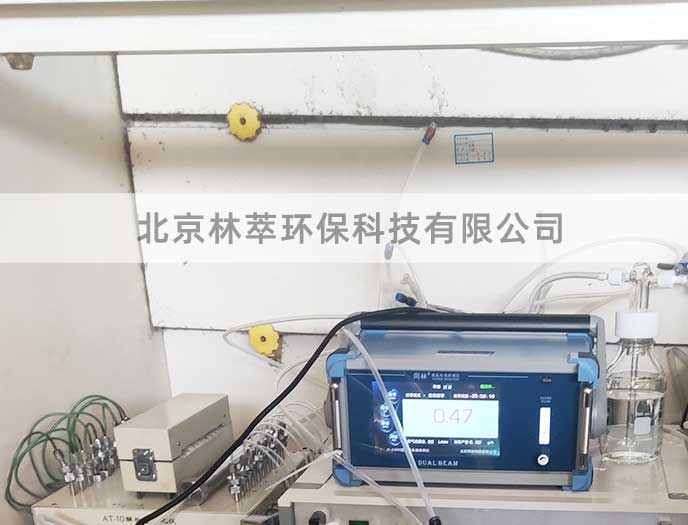
IV. Source of Accuracy: From Optical Stability to Algorithm Compensation
The high accuracy of UV ozone detection comes from three aspects:
Fixed Optical Path: The detection cell has a stable optical path length, reducing physical drift.
Single and Standardized Wavelength: The 254 nm mercury lamp wavelength is standardized, avoiding multi-spectral interference.
Algorithm Compensation and Temperature Correction: Modern instruments have built-in temperature and pressure compensation models, automatically correcting for concentration drift.
Furthermore, high-end equipment also features self-diagnosis and light source aging compensation functions, maintaining measurement accuracy of ±1% over the long term.
V. Application Scenarios: Full-Process Monitoring from Laboratory to Industry
5.1 Laboratory Applications
In ozone generator calibration experiments, UV analyzers can accurately record the curve of ozone concentration change over time, used to evaluate generator efficiency and stability.
They are often integrated with flow meters, reactors, and PLC systems to form closed-loop control for automated experiments.
5.2 Industrial and Environmental Monitoring
In water treatment plants, air disinfection systems, or semiconductor processes, UV analyzers are used to monitor whether the ozone concentration meets process requirements. Their online continuous detection capability allows the system to adjust the ozone dosage in real-time, preventing leakage risks caused by excessive concentration.
VI. Usage Notes and Maintenance Recommendations
Keep optical windows clean to prevent moisture and dust from interfering with light intensity.
Avoid strong vibration or electromagnetic interference to ensure signal stability.
Perform regular calibration (recommended every 6 months using standard ozone gas).
The light source maintenance cycle is approximately 12–18 months; it should be replaced promptly after aging.
Use dry gas to avoid condensation in the detection cell affecting measurement results.
VII. Conclusion
Through precise optical measurement and signal algorithms, UV ozone analyzers can accurately reflect changes in ozone concentration in a very short time, making them one of the most reliable technical means in modern ozone monitoring. Due to their high stability, low maintenance characteristics, and real-time response capability, the UV method has become a mainstream solution in fields such as scientific research, industry, and environmental monitoring.
 Ozone and Indoor Air Quality:
 Comparing Ozone Measurement Te
How to Install a Dissolved Ozo
Comparing Ozone Measurement Te
How to Install a Dissolved Ozo
 Common Myths About Ozone Detec