
Ozone Generator Safety: Monitoring and Alarm Systems
Ozone Generator Safety: Monitoring and Alarm Systems
Ozone is a powerful oxidant widely used in water treatment, food processing, pharmaceutical manufacturing, and semiconductor fabrication. While highly effective, it is also toxic to humans at elevated concentrations. An ozone leak in an enclosed space can quickly reach dangerous levels, putting operators and facilities at risk. This is why every ozone generation system must be paired with a robust safety monitoring and alarm strategy. This article examines the essential components of ozone generator safety and how to design an effective monitoring and alarm architecture.
Why Ozone Generator Safety Cannot Be Overlooked
Ozone generators produce ozone on demand, often at concentrations far exceeding safe human exposure thresholds. The U.S. Occupational Safety and Health Administration (OSHA) has established a permissible exposure limit (PEL) of 0.1 ppm averaged over an 8-hour work shift, with a short-term exposure limit (STEL) of 0.3 ppm for any 15-minute period. The National Institute for Occupational Safety and Health (NIOSH) lists an immediately dangerous to life or health (IDLH) concentration of 5 ppm for ozone.
These thresholds are easily exceeded when a generator leaks, a feed-gas line ruptures, or an off-gas destruction unit fails. Without continuous monitoring, a leak may go unnoticed until someone experiences respiratory distress. The consequences range from worker injury and regulatory penalties to catastrophic equipment damage and facility shutdown.
Key Components of an Ozone Safety System
Ozone Leak Detectors
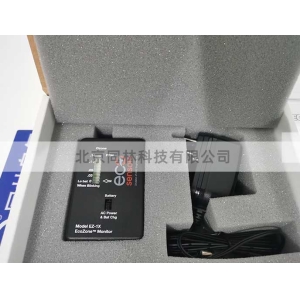
The core of any safety system is a network of ozone leakage detectors positioned strategically around the generator and associated piping. These detectors continuously sample ambient air and trigger alarms when ozone concentration exceeds preset thresholds.
Two sensor technologies dominate ambient ozone detection: electrochemical sensors and UV absorption sensors. Electrochemical sensors are cost-effective, compact, and well-suited for safety-oriented leak detection at concentrations near the alarm threshold (0.1-1 ppm). UV absorption sensors offer superior accuracy and stability for continuous area monitoring but come at a higher price point. Many facilities deploy a mix of both: electrochemical sensors for distributed leak detection and a UV reference monitor for central verification.
For selecting the right device, our gas-phase ozone monitor product line includes both portable and fixed detectors designed for industrial safety applications.
Alarm Thresholds and Response Logic
A well-designed alarm system uses a tiered approach rather than a single threshold:
- Warning level (0.1 ppm): Triggers a visual indicator and logs the event. Operators should investigate the source but do not need to evacuate.
- Alarm level (0.3 ppm): Activates audible and visual alarms throughout the area. Personnel must leave the zone, and ventilation should ramp to maximum capacity.
- Critical level (1.0 ppm or above): Initiates automatic generator shutdown, activates emergency ventilation, and notifies facility safety personnel via relay or SCADA integration.
Each facility should calibrate these thresholds based on local regulations and risk assessments. The U.S. Environmental Protection Agency and OSHA provide detailed guidance on acceptable ozone exposure levels and monitoring requirements.
Audible and Visual Alarms
Alarms must be impossible to miss. Industrial ozone safety systems typically combine strobe lights rated at high candela output with sirens producing at least 85 dB at 3 meters. Alarm devices should be placed at every entrance to the ozone generation area and at all operator workstations. In high-noise environments, consider adding vibration pagers or SMS alerts through integrated control systems.
Emergency Ventilation Interlocks
When an ozone alarm triggers, simply alerting personnel is not enough. The safety system should automatically activate emergency ventilation to purge the space. This is typically achieved through relay outputs from the ozone detector that close a circuit on the ventilation control panel, overriding normal HVAC operation and forcing exhaust fans to full speed. The interlock should fail-safe, meaning that if power or signal is lost, ventilation defaults to ON.
Placement Strategy for Ozone Detectors
Sensor placement is as important as sensor selection. Ozone is heavier than air (molecular weight 48 vs. 29 for air), meaning leaked ozone tends to accumulate in low areas. However, in well-mixed environments with active ventilation, ozone distributes relatively evenly. The following placement guidelines apply:
- Install detectors near the ozone generator, at the gas preparation unit, and along the ozone delivery piping route.
- Place detectors at breathing height (1.2-1.8 meters above floor level) in areas where personnel work.
- For enclosed rooms with poor air circulation, also install detectors near the floor (0.3 meters) to catch pooling ozone.
- Position detectors away from air-conditioning supply diffusers and direct drafts, which can dilute the sample.
- In multi-room installations, install at least one detector per room.
Integrating Ozone Safety into Plant Control Systems
Modern ozone safety systems do not operate in isolation. They are integrated into the plant's overall control architecture, typically a SCADA or PLC system. The integration enables several critical functions:
- Real-time data logging: Continuous recording of ozone concentration at every sensor, with timestamps for audit and compliance purposes.
- Trend analysis: Long-term data reveals slow leaks, sensor drift, or deteriorating piping before they trigger alarms.
- Automated shutdown: When a critical alarm occurs, the PLC immediately cuts power to the ozone generator, isolates the feed-gas supply, and activates emergency ventilation without waiting for human intervention.
- Remote notification: Integration with facility communication systems enables email or SMS alerts to off-site managers and maintenance teams.
For facilities that also monitor dissolved ozone in water lines, a comprehensive dissolved ozone monitor can be integrated into the same SCADA system, providing a unified safety and process monitoring dashboard.
Maintenance and Calibration of Safety Systems
A safety monitoring system is only as reliable as its last calibration. Electrochemical sensors in particular drift over time and have a finite lifespan, typically 18 to 24 months. A neglected sensor that reads zero during a real leak is worse than no sensor at all. The following maintenance practices are essential:
- Bump test: Verify sensor response using a known concentration of ozone or a surrogate gas, performed weekly or bi-weekly.
- Full calibration: Performed every 3-6 months using a certified ozone reference source, adjusting the zero and span points.
- Sensor replacement: Replace electrochemical sensors at the manufacturer-recommended interval, even if they appear functional.
- Alarm function test: Verify that all audible-visual devices, ventilation interlocks, and shutdown relays activate correctly during each calibration cycle.
For calibration resources and technical guidance, visit our support and quotation page to request instrument documentation and calibration tooling.
Common Ozone Safety System Failures
Even well-designed safety systems can fail if not properly managed. The most frequent failure modes include:
- Sensor poisoning: Exposure to high concentrations of ozone or other oxidizing gases can saturate or degrade electrochemical sensors, causing them to read low or flat-line.
- False alarms: Cross-sensitivity to gases such as chlorine, nitrogen dioxide, or chlorine dioxide can cause nuisance alarms, leading operators to disable or ignore the system.
- Bypass during maintenance: Operators may temporarily disable alarms during generator service and forget to re-enable them. Always use a formal lockout-tagout procedure.
- Inadequate coverage: Expansions or modifications to the ozone system may leave new piping runs unmonitored. Conduct a sensor placement audit after any layout change.
Conclusion
Ozone generator safety is a multi-layered discipline that combines appropriate detection technology, intelligent alarm logic, automated ventilation interlocks, and rigorous maintenance. By deploying a network of reliable ozone leakage detectors at strategic points, calibrating them on schedule, and integrating the safety system into plant-wide controls, facility managers can protect both personnel and equipment from the hazards of ozone exposure.
Beijing Linji Environmental Technology Co., Ltd. provides a full range of ozone monitoring instruments, from fixed area monitors to portable leak detectors, for industrial safety applications. Contact us to discuss your ozone generator safety requirements.
 Case Study: Ozone Monitoring i
 Ozone Monitoring in Food &
 The History of Ozone Detection
How Ozone Is Used in Semicondu
The History of Ozone Detection
How Ozone Is Used in Semicondu