
PPB-Level Ozone Measurement: Challenges and How to Get Reliable Readings
PPB-Level Ozone Measurement: Challenges and How to Get Reliable Readings
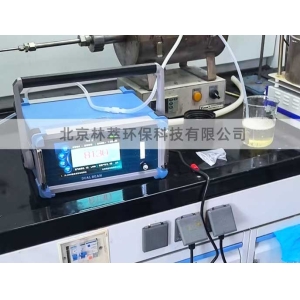
Most ozone detectors are asked to answer one question: is the concentration near a safety threshold, in the tenths-of-ppm range? But a growing set of applications — ultrapure water loops, semiconductor process gas, laboratory research, and leak tracing — push the requirement down to parts-per-billion (ppb) levels. At those concentrations, ozone measurement stops being a simple readout exercise and becomes a systems problem. Tubing, ambient air quality, sensor technology, and even how you power the instrument all affect whether the number on the display can be trusted.
This guide explains what makes ppb-level ozone measurement difficult, which sensor technologies are suitable, and the practical steps that keep trace-level readings reliable over time.
Why PPB-Level Ozone Detection Is Difficult
One ppb is one ozone molecule per billion air molecules — roughly a thousand times below the U.S. Occupational Safety and Health Administration (OSHA) permissible exposure limit for ozone of 0.1 ppm as an 8-hour time-weighted average, published in the Z-1 Table of 29 CFR 1910.1000. At that dilution, three problems dominate:
1. Background interference
Natural background ozone in outdoor air typically sits in the range of a few ppb to tens of ppb, depending on location and season — a fact documented by the U.S. Environmental Protection Agency in its national ambient air monitoring programs. When your target signal is also in the ppb range, ambient ozone and oxidants such as NO2, chlorine, and VOCs become confounding variables rather than trace noise. A sensor that responds to "oxidizing gases in general" cannot separate 5 ppb of ozone from 5 ppb of something else.
2. Ozone loss in the sampling path
Ozone is chemically reactive. Every surface it touches can consume it: elastomer tubing, rubber seals, dust filters, moisture condensate, and even long runs of stainless steel that have not been passivated. Loss rates that are negligible at 1 ppm become fatal at 20 ppb. A degraded sample line can consume half the ozone before the gas ever reaches the sensor, and the instrument will faithfully display a number that is simply wrong.
3. Sensor zero drift
At low concentrations, the sensor's zero point is the largest term in the error budget. An electrochemical cell with a ±2 ppb zero drift is acceptable for ppm-range safety monitoring but unusable for 10 ppb measurements. UV absorption instruments avoid chemical drift but introduce optical drift — lamp aging, contamination of cuvette windows — which must be managed through reference channels or periodic zero verification.
Sensor Technologies Suitable for Trace Ozone Measurement
Not every ozone sensor technology can realistically work at ppb levels. The main candidates:
UV absorption (254 nm)
The reference-grade approach. Ozone strongly absorbs the 254 nm mercury-line wavelength, and a dual-beam or dual-cell UV analyzer compares sample gas against ozone-free reference gas to derive concentration from the Beer-Lambert law. Quality UV ozone analyzers achieve single-digit ppb resolution with long-term stability, because the method is a direct physical measurement — no consumable chemistry to drift. This is why UV absorption is the technique behind national reference instruments and why it dominates in semiconductor and laboratory trace work.
Electrochemical cells
Electrochemical ozone sensors respond to oxidizing species at an electrode, producing a small current. Their strength is low cost and low power; their weakness at trace levels is selectivity and zero drift. In clean, stable environments they can track ppb-level trends, but they require frequent zero calibration and should not be treated as reference instruments.
Semiconductor (MOS) sensors
Metal-oxide sensors are the least suitable for quantitative ppb work. They respond broadly to many reducing and oxidizing gases, and their output drifts with humidity and temperature. They are useful as qualitative "ozone present / ozone absent" indicators, not as concentration meters.
For a deeper comparison of the two leading technologies, see our article on UV absorption versus electrochemical ozone sensors.
Common Sources of Error at Low Concentrations
When trace-level readings look unstable or implausible, the cause is usually one of the following:
- Wrong tubing material. Silicone, natural rubber, and most plastics scrub ozone rapidly. Use PTFE (Teflon), FEP, or 316L stainless steel.
- Excessive line length. Even with good tubing, keep sample lines as short as practical. If a long run is unavoidable, larger flow rates reduce residence time and surface contact.
- Leaks. A tiny leak in a low-flow sampling system pulls in ambient air — which itself contains background ozone — and shifts readings unpredictably.
- Hydrocarbons and VOCs. Ozone reacts with VOCs inside the sample line and the sensor chamber, destroying both the analyte and, in electrochemical cells, the electrolyte chemistry.
- Condensation. Water films on tubing walls absorb and react with ozone. Sample gas should be kept above its dew point.
- Skip-zero assumptions. Instruments left unzeroed for months accumulate drift that dwarfs a 10 ppb signal.
Best Practices for Reliable PPB-Level Readings
Design the sampling system first
Treat the sampling path as part of the instrument. Specify inert materials end to end — PTFE or FEP line, stainless fittings, PTFE diaphragm pumps — and verify the whole train with a challenge gas: feed a known ozone concentration through the full length of tubing and compare it with a measurement taken directly at the source. Any discrepancy is line loss, and it should be single-digit percent or less.
Zero-check frequently with ozone-free air
A zero check costs minutes and exposes more problems than any other single test. Use activated-carbon-scrubbed air or a certified zero-air cylinder. If the instrument cannot return to a stable, credible zero, no low-range reading it produces can be trusted until it is serviced or recalibrated. Our guide on how often to calibrate an ozone detector covers practical intervals for different duty cycles.
Interpret the environment
If the measurement point is indoors near a corona-generating device (laser printers, electrostatic equipment, an ozonated water system vent), background ozone may exceed the signal you are trying to isolate. Map the site first before drawing conclusions from the instrument.
Match the instrument range to the task
A safety monitor with a 0–1 ppm range and 0.01 ppm resolution is not a ppb analyzer, however its display may look. For trace work, choose an instrument whose specified resolution and noise floor are at least several times below the concentrations you need to resolve. Our gas ozone monitor product range includes UV-based analyzers designed for low-range measurement, and our team can help match range, flow, and output requirements to your process — see the quotation and support page to start that conversation.
Document everything
Trace-level data is only defensible with a paper trail: tubing material and length, flow rate, zero-check dates, calibration certificates, and ambient conditions. Regulators, auditors, and process engineers will all ask the same first question — how do you know the number is right?
Choosing the Right Instrument for Trace Ozone Work
A short checklist for ppb-level applications:
- Technology: UV absorption for reference-grade or process-critical work; electrochemical only for trend monitoring in clean environments.
- Resolution and noise: specified at the low end of the range, not just the full-scale figure.
- Zero stability: drift spec compared against your smallest target signal.
- Sample interface: inert wetted materials, defined flow requirement, optional external pump for long or elevated sample points.
- Outputs: analog (4–20 mA), digital (RS-485/Modbus), and alarm relays for integration with process control or data logging.
- Maintenance path: availability of zero-air kits, spare cells, and factory calibration services.
Conclusion
At ppm levels, ozone measurement is mostly about the sensor. At ppb levels, it is mostly about everything around the sensor — the sampling train, the background environment, and the zero reference. Facilities that succeed at trace ozone measurement invest in inert sampling design, disciplined zero verification, and instruments whose specifications honestly cover the low range. Facilities that skip those steps usually discover, sooner or later, that their "5 ppb" was never real.
If you are planning a low-concentration ozone monitoring application and need help selecting or configuring an analyzer, contact us through the quotation page — include your target range, sample conditions, and required outputs, and we will recommend a configuration that fits.
 Where to Install an Ozone Moni
Ozone Monitor Bump Test vs Cal
 Why Is My Ozone Detector Readi
PPB-Level Ozone Measurement: C