
Portable vs Fixed Ozone Detectors: Which One Do You Need?
Portable vs Fixed Ozone Detectors: Which One Do You Need?
When planning an ozone detection strategy for your facility, one of the first decisions you will face is whether to deploy portable ozone detectors, fixed ozone monitoring systems, or a combination of both. Each type serves distinct purposes, and choosing the wrong approach can leave gaps in your safety coverage or lead to unnecessary costs.
This article provides a detailed comparison of portable and fixed ozone detectors — covering their key differences, ideal applications, cost considerations, and practical advice on building a comprehensive monitoring strategy. By the end, you will have a clear understanding of which solution fits your ozone monitoring needs.
Understanding the Two Types of Ozone Detectors
What Is a Fixed Ozone Detector?
A fixed ozone detector is a permanently installed device designed for continuous, real-time area monitoring. Mounted on walls, ceilings, or equipment racks at strategic locations, these detectors provide 24/7 surveillance of ambient ozone levels. Fixed monitors are the backbone of industrial ozone safety programs and are commonly integrated with alarm systems, ventilation controls, and centralized monitoring platforms.
Key characteristics of fixed ozone detectors include:
- Continuous operation — 24/7 monitoring without human intervention
- Alarm relay outputs — trigger sirens, strobe lights, fans, or building management systems
- Data logging and trending — record long-term exposure data for regulatory compliance
- Wide detection range — typically 0–10 ppm or higher for gas-phase applications
- Networked communication — RS-485, 4–20 mA, Modbus, or Ethernet connectivity
Explore our range of gas-phase ozone monitors designed for fixed installations in industrial environments.
What Is a Portable Ozone Detector?
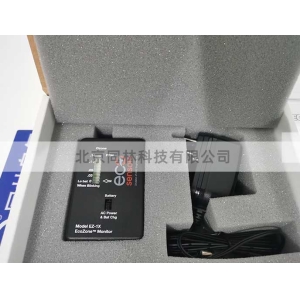
A portable ozone detector is a handheld or wearable device used for spot-checking, area surveying, and personal exposure monitoring. Battery-powered and lightweight, these instruments allow safety personnel, technicians, and auditors to measure ozone concentrations anywhere in a facility — especially in areas not covered by fixed monitors.
Key characteristics of portable ozone detectors include:
- Battery-powered — operates for 8–24 hours on a single charge
- Compact and lightweight — easily carried in a pocket or clipped to a belt
- Built-in alarm — audible, visual, and vibration alerts for personal safety
- Data recording — stores readings for later download and analysis
- Multi-gas capable — many models also detect H₂S, CO, Cl₂, and other gases
For environments where water-phase ozone is also a concern, our dissolved ozone monitors complement portable gas-phase detectors with targeted liquid-phase measurements.
Fixed vs Portable: A Side-by-Side Comparison
| Feature | Fixed Ozone Detector | Portable Ozone Detector |
|---|---|---|
| Primary use | Continuous area monitoring | Spot-checking and personal safety |
| Power source | Wired AC/DC power | Rechargeable battery |
| Operation mode | 24/7 unattended | On-demand, carried by user |
| Detection range | 0–10 ppm (typical) | 0–20 ppm (typical) |
| Accuracy | ±1–5% of full scale | ±5–10% of full scale |
| Alarms | Relay outputs for external sirens/lights | Built-in audible/visual/vibration |
| Data logging | Continuous long-term recording | Session-based manual recording |
| Connectivity | RS-485, 4–20 mA, Modbus, Ethernet | USB or Bluetooth download |
| Sensor technology | UV absorption or electrochemical | Primarily electrochemical |
| Maintenance | 6–12 month calibration intervals | More frequent bump testing needed |
| Cost per unit | Higher initial investment | Lower initial investment |
| Lifespan | 5–10+ years | 2–5 years (sensor replacement) |
When to Choose a Fixed Ozone Detector
Fixed detectors are the right choice when you need uninterrupted monitoring of a defined area and the ability to trigger automated safety responses. Here are the scenarios where fixed monitors are essential:
Critical Leak Detection Zones
Areas around ozone generators, storage tanks, and gas injection points must be continuously monitored. A fixed detector with relay outputs can automatically shut down the generator and activate ventilation when ozone levels exceed safe thresholds. The OSHA permissible exposure limit for ozone is only 0.1 ppm (8-hour TWA), making unattended fixed monitoring essential for compliance.
Occupied Workspaces
Control rooms, operator stations, and production floors where personnel work regular shifts should have fixed monitors installed at breathing height. These systems protect workers during their entire shift, providing an early warning before ozone reaches hazardous levels.
Process Control Applications
In water treatment plants, semiconductor fabs, and food processing facilities, fixed ozone analyzers provide the real-time concentration data needed for precise process control. A 4–20 mA or Modbus output sends readings directly to PLCs and SCADA systems, enabling automated ozone dose adjustment.
Regulatory Compliance
When documenting environmental emissions or occupational exposure for regulatory agencies like the U.S. Environmental Protection Agency, continuous fixed monitoring data provides the defensible, timestamped records required for audits and reporting.
When to Choose a Portable Ozone Detector
Portable detectors fill the gaps that fixed monitors cannot cover — they bring detection capability anywhere in the facility, on demand. Here is where portable instruments shine:
Area Surveys and Hazard Mapping
Before installing fixed monitors, safety professionals use portable detectors to survey the facility and map ozone concentration profiles. This data identifies hot spots, validates ventilation effectiveness, and determines the optimal placement for permanent fixed sensors.
Confined Space Entry
Before workers enter tanks, vessels, or enclosed treatment chambers where ozone may have accumulated, a portable detector must be used to verify safe atmospheric conditions. This is a mandatory pre-entry safety check in many industries.
Maintenance and Inspection Rounds
Technicians performing routine equipment inspections can carry a portable detector to check for leaks at pipe fittings, valves, and gaskets. This proactive approach catches small leaks before they become safety incidents.
Personal Exposure Monitoring
Wearable portable detectors clipped to a worker's breathing zone provide the most accurate measurement of individual ozone exposure throughout a shift. This data is invaluable for occupational health assessments and demonstrating regulatory compliance.
Emergency Response
During a suspected ozone release, portable detectors are the first tools deployed to assess the situation from a safe distance. Fixed monitors may already indicate elevated levels, but portable instruments help responders delineate hazard zones and confirm that levels have returned to safe limits before re-entry.
Why Not Both? Building a Layered Monitoring Strategy
The most effective ozone safety programs combine both fixed and portable detectors in a layered monitoring strategy. This approach provides overlapping coverage and eliminates single points of failure. Here is what a layered strategy looks like in practice:
- Fixed detectors provide continuous, unattended monitoring at critical leak points, generator rooms, and occupied workspaces — triggering alarms and automated shutdowns if levels rise.
- Portable detectors fill coverage gaps in corridors, utility spaces, and temporary work areas that do not justify permanent monitors.
- Personal wearable detectors provide the final layer of protection for workers operating near ozone equipment, ensuring that even if area monitors miss a localized release, the individual is still protected.
This layered approach aligns with industrial best practices and is recommended by occupational safety organizations worldwide. It is also the most cost-effective strategy — fixed monitors protect high-risk zones continuously, while portable and wearable units provide flexible coverage elsewhere.
Cost Considerations: Upfront vs Total Cost of Ownership
When comparing costs, look beyond the initial purchase price. The table below illustrates the total cost profile of each detector type over a typical 5-year service life:
| Cost Factor | Fixed Detector (per unit) | Portable Detector (per unit) |
|---|---|---|
| Hardware purchase | $800–$3,000+ | $300–$1,200 |
| Installation | $200–$1,000 (wiring, mounting) | None |
| Annual calibration | $150–$300 | $100–$200 |
| Sensor replacement | Every 3–5 years, $200–$600 | Every 1–3 years, $100–$300 |
| 5-Year Total (approx.) | $1,750–$5,500 | $900–$2,700 |
Fixed detectors have higher upfront costs but lower long-term maintenance requirements, especially UV-based models. Portable detectors are cheaper to deploy initially but require more frequent sensor replacements and may need replacement units every few years. For a tailored cost estimate for your facility, request a quotation from our team.
Key Factors to Consider When Choosing
Before making a final decision, evaluate these five factors for your specific facility:
- Monitoring coverage area — How many distinct locations need monitoring? For more than 3–4 locations, a network of fixed monitors with portable backup is usually justified.
- Risk profile — Are ozone concentrations consistently present, or is it an occasional concern? Continuous risk calls for fixed detectors; intermittent risk may be served by portables.
- Regulatory requirements — Does your jurisdiction require continuous monitoring records? If so, fixed detectors with data logging are essential.
- Staff availability — Do you have personnel available for regular portable detector surveys? Fixed monitors are better suited for lean operations with minimal staffing.
- Integration needs — Do you need to link ozone readings to a SCADA or building management system? Fixed detectors with analog or digital outputs are the only option for automated integration.
Conclusion
Portable and fixed ozone detectors each serve essential roles in a comprehensive monitoring strategy. Fixed detectors provide the continuous, connected, alarm-ready monitoring that high-risk zones demand. Portable detectors offer the flexibility, mobility, and personal protection that no fixed system can replicate. For most facilities, the right answer is not one or the other — it is a thoughtfully designed combination of both, deployed in layers that match the facility's specific risks and operational needs.
Ready to build or upgrade your ozone detection system? Explore our complete range of gas ozone monitors and dissolved ozone monitoring solutions, or contact us for a custom quotation tailored to your facility's requirements.
 Case Study: Ozone Monitoring i
 Ozone Monitoring in Food &
 The History of Ozone Detection
How Ozone Is Used in Semicondu
The History of Ozone Detection
How Ozone Is Used in Semicondu