
Confined Space Entry and Ozone: When to Test, Where to Sample, and What to Set the Alarm To
Confined Space Entry and Ozone: When to Test, Where to Sample, and What to Set the Alarm To
A crew opens a sump beside an ozone contact tank, lowers a detector on a rope, watches it settle at zero, and sends a man down. Eight minutes later the monitor on his harness is screaming and he is climbing out with a headache. Nothing failed: the reading at the top of the sump was real, and so was the reading two metres below it.
Confined space work turns ozone monitoring from a wall-mounted instrument problem into a sampling problem. The space does not mix, the gas does not sit still, and the person inside cannot see the display. Three decisions decide the outcome: when you test, where you sample, and what the alarm is set to.
Why does ozone collect at the bottom of a space?
Ozone is roughly 1.6 times as dense as air. In a ventilated room that hardly matters, because convection stirs everything together. In a pit, a sump, a tank, a manhole or a duct there is no stirring: gas that enters slowly and weighs more than the air around it sinks and stays.
The second reason is the lack of air exchange. A sealed tank with one hatch may turn its contents over once a day, by diffusion alone, so ozone leaking in from next door has nowhere to go.
The third reason cuts the other way. Ozone decays back to oxygen on its own, faster on warm surfaces and in dirty ductwork, so a space can read high in the evening and low the next morning with nobody ventilating it. That low reading is not evidence of safety, only that time has passed.
What does the pre-entry test actually prove?
It proves one thing: the concentration at the end of the sample line, at one depth, at one moment. That is narrower than the sign-off sheet implies, and a good share of confined space incidents involve a test done correctly that answered a different question than the one that mattered.
Run the tests in a fixed order
The sequence used across the industry is oxygen first, then flammable gas, then the specific toxic gases the space can produce. Oxygen comes first because the entrant and several sensor types depend on it, and because an oxygen-deficient space changes how every other reading should be read. Ozone belongs in the toxic group, and on many multi-gas instruments it is not a standard channel, so it needs its own detector or a swapped-in cell.
Sample at three depths, not one
Treat the top, middle and bottom third as three locations. Lower the line to the bottom third first, because that is where ozone accumulates, then work upward. If the bottom reads high and the top is clean, you have a stratified space, and forcing air in at the hatch will not clear it.
Give the line and the sensor their time
A 10-metre sample line does not deliver a reading instantly: the gas travels the tube, then the sensor responds, and both delays add. Transport time depends on flow rate and internal volume; sensor response is described by its T90 figure. Pull a sample for thirty seconds and you may be reading the air that was in the tube when you began, so purge until the number stops changing for a full minute.
Use PTFE or FEP tubing. Silicone and natural rubber absorb and release ozone, which blurs a stable reading into a drifting one.
What changes once the work starts?
The pre-entry test describes a still space. Entry makes it a working space. Hot work raises surface temperatures. Solvent vapour from cleaning attacks electrochemical cells and can push a reading either way. Rodding a drain or starting a pump in an adjacent tank can move gas in within seconds. None of that appears in a test taken ten minutes earlier at the hatch.
So monitor continuously, rather than signing off on a single test. The test decides whether entry is allowed. The monitor decides whether it continues.
Where should the monitor sit during the job?
Put the sensor where the person is breathing, and the alarm where both the entrant and the attendant can hear it. Those two requirements conflict, so settle them before the shift.
A pumped instrument with a long line lets the attendant read the display from outside, and adds lag: the number describes gas that left the space seconds ago. Fine for a slow-changing space, less so where a valve can open without warning. A diffusion unit on the harness responds faster, but only the entrant can read it, which is why its alarm has to carry through a hatch and over the work.
Many sites use both: a worn unit for the entrant, a pumped unit with the attendant for the record. If the two disagree beyond their stated accuracy, treat the higher number as true.
What alarm setpoints should you use?
Two stages work better than one. The first warns that the space is changing so people can ventilate or pause; the second tells them to leave. A single alarm set close to the exposure limit leaves no time to react, and one set far below it gets silenced and then ignored.
For reference, the US occupational exposure limit for ozone is 0.1 ppm as an 8-hour time-weighted average, listed in the OSHA air contaminants table at 29 CFR 1910.1000 Table Z-1; the EPA summary of ozone health effects explains why that limit sits so low. A confined space is not a normal workplace: exposure is short, gas does not disperse, and the entrant may breathe two or three times the resting volume. A first stage at a fraction of the limit and a second at the limit is common practice; agree the numbers with your safety officer, not a datasheet default.
| Check | What it answers | What it cannot answer |
|---|---|---|
| Pre-entry test | Is the space acceptable to enter now? | What will happen in twenty minutes |
| Continuous monitoring | Is it still acceptable while people are inside? | Whether the entrant is fit to stay |
| Post-job retest | Is it safe to leave open or re-enter? | Whether a sealed space stays clean overnight |
Enable a short alarm delay so a door opening does not trigger an evacuation, and disable automatic reset so the alarm stays on until someone acknowledges it.
Ventilate, then retest — in that order
Blowing air into the hatch is not the same as clearing the space. Air short-circuits: in at the top, across the opening, out again, without reaching the bottom third where the ozone sits. Blow in at the bottom, exhaust at the top, then retest at the bottom first. The usual error here is treating a completed ventilation pass as a result.
If the ozone source is equipment inside or beside the space — a generator, an injection line, a vent — isolate it before entry instead of trusting the reading to stay low. Lock-out and tag-out belongs before the test, not after.
What to look for in the instrument
- Battery life covering the shift with the pump running and the alarm enabled. A monitor that dies at hour five ends the job.
- Datalogging with a real timestamp, so the permit file holds the concentration through the job rather than one number at the start.
- A housing that survives the space: dust and water ingress, impact on a tank ladder.
- An alarm you can hear through a hatch, over a pump, and through a respirator.
For wet, dusty or outdoor spaces the housing is what ends a monitor early, fixed or carried. Placement in fixed installations is covered in where to install an ozone monitor, and the wet and outdoor case separately in installing a monitor outdoors or in a wet, dusty plant.
Pre-entry checklist
- Isolate any ozone source feeding the space, and tag it.
- Test oxygen, then flammables, then ozone — bottom third first, then middle, then top.
- Purge the line until the reading is stable for a minute before recording anything.
- Add the instrument's response time to the line's transport time before trusting a number.
- Ventilate from the bottom, exhaust from the top, then repeat steps 2 and 3.
- Set two alarm stages and agree them with the safety officer before entry.
- Decide who reads the display and who hears the alarm, and verify both.
- Log the readings against the permit, with times.
The pattern is the one that governs ozone measurement anywhere: a reading is only as good as the sample that reached the sensor. In a ventilated room you can relax about that. In a sump you cannot, because the gas you need to know about is at the bottom and the person who needs to know is at the top.
For the equipment side, see the scissor lift ozone monitoring setup and the ozone-in-water range, plus the citations page for the standards above. Sizing a monitor for a specific space? Send us the dimensions and the job.
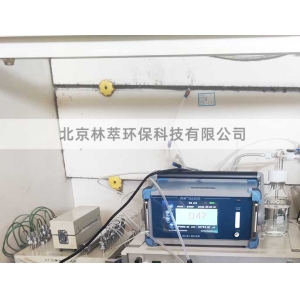 Confined Space Entry and Ozone
 How Do You Prepare Zero Air an
Can You Install an Ozone Monit
 When Should You Replace the UV