
How Temperature and Humidity Affect Ozone Monitor Readings
How Temperature and Humidity Affect Ozone Monitor Readings
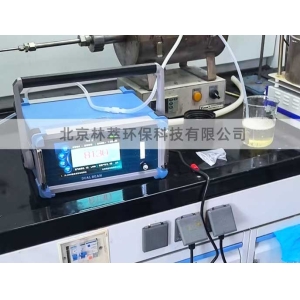
Ozone is unstable by nature. It decomposes on contact with surfaces, reacts with moisture, and its concentration in a sample can change within seconds. That is why a gas phase ozone monitor does not operate in a vacuum: the temperature and humidity of the sample and of the instrument itself both influence what the display shows. If you have ever compared two ozone analyzers side by side and wondered why the numbers disagree, environmental conditions are often part of the answer.
This article explains, in practical terms, how temperature and humidity affect ozone measurements, how different measurement technologies respond, and what you can do to keep your readings trustworthy.
Why Environmental Conditions Matter in Ozone Measurement
Two separate effects are easy to confuse:
- Chemical effects — temperature and humidity change how fast ozone decomposes in the sample line, in the measurement cell, and on surfaces. Higher temperatures accelerate decomposition; moisture both accelerates decay and, on some sensor types, participates directly in the electrochemistry.
- Instrument effects — electronics, optical components, and sensor membranes respond to their own temperature. A drift in the instrument's internal temperature can shift the reading even when the ozone concentration is unchanged.
Both effects matter for compliance monitoring as well. Workplace ozone exposure limits — for example, the permissible limits listed in OSHA 29 CFR 1910.1000 (Air Contaminants) — are defined as time-weighted average concentrations. A monitor that drifts with the seasons can quietly distort a long-term exposure record.
How Temperature Affects Ozone Readings
Ozone Decomposition Speeds Up with Heat
Ozone molecules break down faster as temperature rises. In a hot sample line or a sun-exposed enclosure, ozone that enters the tubing may partially decay before it reaches the sensor, so the reading reads lower than the concentration at the sample point. This effect compounds with long sampling lines and reactive tubing materials — a topic covered in detail in our article on ozone sampling lines and tubing materials.
In practice this means the sample path should stay as short and cool as reasonably possible, especially when measuring low concentrations in the ppb range, where a small absolute loss is a large relative error.
Instrument Internal Temperature and Drift
Most ozone monitors are specified for a specific ambient operating range (commonly room temperature up to around 40–50 °C, depending on the model). Outside this range, three things can happen:
- Zero drift — the baseline reading shifts because detector electronics and optical components change behavior with temperature.
- Span change — the sensitivity of the measurement cell varies, so the same concentration produces a slightly different output.
- Condensation risk — when a cold instrument is moved into warm, humid air, moisture can condense on optics or inside the cell, causing unstable or pegged readings until it dries.
Quality instruments include internal temperature compensation, but compensation cannot cover the entire operating range. The safest habit is to let a monitor equilibrate to its environment before trusting the numbers, and to calibrate at a temperature close to the one you will measure at.
How Humidity Affects Ozone Readings
UV Absorption Analyzers: Moisture in the Optical Path
UV absorption analyzers — the technology behind most precision ozone analyzers — measure how much 254 nm light ozone absorbs. Water vapor itself does not absorb strongly at this wavelength, so humidity does not create a direct interference the way it does with some other gases. The problems are indirect:
- Condensation on optics — droplets on the lamp window or detector scatter light and can mimic a concentration change.
- Ozone decay in humid samples — moisture on the walls of the sample cell and tubing accelerates decomposition, lowering the reading.
- Corrosion over time — persistent condensation inside the instrument shortens the life of seals and electronics.
For high-humidity sample points, a short, heated PTFE sample line and a well-drained cell help the reading represent the gas at the sample point rather than the moisture in the line.
Electrochemical and Semiconductor Sensors: Direct Interference
Electrochemical ozone sensors are more humidity-sensitive than UV analyzers. Water vapor participates in the sensor's electrochemical reactions and can shift both the zero point and the sensitivity. Rapid humidity changes — for example, moving a portable detector from an air-conditioned room to a humid workshop — can produce a temporary offset that looks like a real ozone event. Semiconductor (metal-oxide) sensors respond to humidity as well, which is one reason they are generally chosen for alarm-level detection rather than precision measurement.
If your process requires dissolved ozone measurement instead of gas phase, humidity matters less but temperature still affects both the membrane sensor and the solubility of ozone in water. Our dissolved ozone monitor section covers instruments designed for that environment.
Practical Ways to Protect Reading Accuracy
You do not need a laboratory to control most of these effects. A short checklist covers the majority of field problems:
- Shorten the sample path. Every meter of tubing is a place where ozone decays. Keep lines as short as the installation allows.
- Use inert tubing. PTFE and FEP lines preserve ozone well; rubber and silicone lines decompose ozone on contact and cause low readings.
- Keep the instrument inside its rated range. If the measurement point is hot or cold, add shading, ventilation, or a small enclosure heater rather than trusting the compensating electronics to do all the work.
- Prevent condensation. Avoid moving a cold monitor into humid air with the pump running; let it warm up first.
- Calibrate under realistic conditions. If the analyzer will live at 35 °C, calibrating it at 20 °C leaves a gap that compensation may not fully close.
- Watch for seasonal drift. A monitor that reads fine in winter and odd in summer may be telling you about its electronics, not your ozone.
Placement matters too. A monitor mounted next to a heat source, in direct sun, or at a doorway with changing drafts will see its own microclimate. Our ozone detector placement guide explains how to choose a mounting point that reflects the air your workers actually breathe.
When to Verify Your Monitor Against a Reference
Routine checks catch most environmental drift early. A practical schedule looks like this:
- Daily: glance at the zero reading when the process is known to be ozone-free. A shifted zero is the first sign of temperature or humidity trouble.
- Monthly: compare portable and fixed instruments at the same sample point. Significant disagreement between two healthy instruments usually points to a sampling or environmental difference, not to a fault.
- Per calibration interval: span-check against a calibrated ozone source. Record ambient temperature and humidity during the check so future anomalies can be interpreted.
If you need help interpreting readings across seasons, or want an instrument suited to a hot or humid installation, our team can advise — start with the request form on our quotation and support page.
Key Takeaways
- Temperature accelerates ozone decomposition and shifts instrument baselines; keep sample paths short, inert, and inside the rated operating range.
- Humidity mainly hurts UV analyzers through condensation and accelerated decay, while electrochemical sensors respond to moisture directly.
- Most field errors are prevented with basic engineering: short PTFE lines, thermal protection, controlled equilibration, and calibration under realistic conditions.
- When readings look wrong, compare instruments at the same point and note temperature and humidity before concluding that the monitor has failed.
Accurate ozone data is the product of a good instrument and a good installation working together. Paying attention to the environment around your ozone monitor costs little and protects the decisions you make with the data.
 Where to Install an Ozone Moni
Ozone Monitor Bump Test vs Cal
 Why Is My Ozone Detector Readi
PPB-Level Ozone Measurement: C