
Can You Smell Ozone Before It Becomes Dangerous? Odor Threshold vs Exposure Limits
Can You Smell Ozone Before It Becomes Dangerous? Odor Threshold vs Exposure Limits
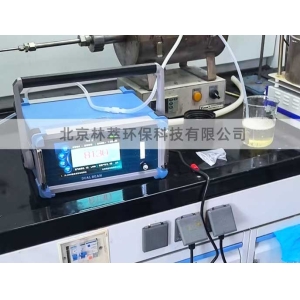
Almost everyone knows the smell. It is the sharp, faintly sweet odor that hangs in the air after a thunderstorm, near a photocopier that has been running all afternoon, or around an ozone generator room. Many workers treat that smell as their personal warning system: if they can smell ozone, ozone is there; if they cannot, it must be safe. It is a tidy piece of folk wisdom — and mostly wrong. Your nose does react to ozone at very low concentrations, but it is a poor substitute for a real ozone detector, and the gap between "I can smell it" and "I am being overexposed" is where most safety mistakes happen.
This article explains what the ozone odor threshold actually is, where it sits compared with the occupational exposure limits, why human smell fails as a monitoring tool, and what a proper monitoring setup looks like instead.
What Ozone Smells Like and Why
Ozone (O₃) has a distinctive odor that most people describe as "fresh," "electric," or similar to chlorine. The smell comes from the same property that makes ozone useful: it is a strong oxidant, and the molecules that attack odors and microorganisms also trigger receptors in your nose. Humans appear to be unusually sensitive to it compared with many other industrial gases, which is why a thunderstorm can scent the air even though the ozone concentration outdoors is tiny.
That sensitivity is real, and it is worth understanding. But sensitivity is not the same as reliability, and the difference matters when the gas in question is a regulated workplace hazard.
The Odor Threshold and the Exposure Limit: Two Very Different Numbers
When people talk about smelling ozone, two numbers come up again and again. They measure completely different things, and confusing them is the root of the problem.
The odor threshold: when most people notice a smell
The odor threshold is the concentration at which an average person can detect the gas by smell. Published values for ozone vary considerably between studies and individuals, but they are commonly reported in the range of roughly 0.01 to 0.05 ppm. At those levels many people describe the air as "clean" or "electric" rather than unpleasant. Importantly, this is a perception statistic, not a safety figure. It tells you when an average nose notices something — nothing more.
The exposure limit: what regulators allow
Occupational exposure limits are set by regulators based on health effects, not on whether you can smell the gas. In the United States, OSHA's permissible exposure limit for ozone is 0.1 ppm as an 8-hour time-weighted average, listed in Table Z-1 of 29 CFR 1910.1000. NIOSH's recommended exposure limit sits at the same 0.1 ppm value. Some health organizations recommend lower values for comfort and precaution in occupied spaces.
Put the two numbers side by side and you can see the trap:
| Concentration | What it means | What it tells you |
|---|---|---|
| ≈ 0.01–0.05 ppm | Odor detection range commonly reported for ozone | An average person may notice a smell — individual thresholds vary widely |
| 0.1 ppm (8-hour TWA) | OSHA permissible exposure limit; NIOSH recommended limit | The regulatory ceiling for a full working shift |
Notice what the table does not say. It does not say "if you cannot smell it, you are safe," and it does not say "if you can smell it, you are overexposed." Both conclusions are wrong, for different reasons.
Three Reasons Your Nose Fails as an Ozone Detector
1. Odor fatigue kicks in fast. Continuous exposure to a smell dulls your perception of it. Workers who spend a shift in a room with a low ozone background often stop noticing the odor within minutes, even though the instrument in the corner keeps reading the same concentration. The nose adapts; the detector does not. This is why "I don't smell anything anymore" is not evidence of safety.
2. Individual thresholds vary enormously. The 0.01–0.05 ppm range is an average across study populations. Colds, smoking, age, and simple genetic differences shift a person's personal threshold in both directions. Two technicians standing in the same room can disagree completely about whether there is any smell at all. A monitoring program built on a sense that varies that much between people is not a program at all.
3. Other smells mask and mimic ozone. Ozone's "fresh electric" note is easily drowned out by solvents, cleaning products, or the general background of an industrial floor. Worse, several other sources produce similar smells, so people routinely misattribute them. The "ozone smell" from a bank of laser printers or an electrostatic air filter may or may not come with a concentration that matters — and only a measurement can say.
Where People Actually Run Into Ozone Odor
Ozone odor complaints cluster in a few predictable places. Offices and copy rooms generate small amounts of ozone from photocopiers and laser printers; in a small, poorly ventilated room the concentration can climb high enough to notice. Homes and workplaces using ozone-producing air "purifiers" are another classic case — the United States EPA addresses this directly on its page Ozone Generators that are Sold as Air Cleaners, which explains that ozone at levels that may be breathed in deliberately by device users can pose health concerns. Water treatment plants and ozone generator rooms produce the highest concentrations, which is why these areas are normally treated as monitored zones rather than relying on anyone's nose. And of course, the smell after a thunderstorm is real ozone — nature's own demonstration that detection by odor happens far below hazardous levels.
In each of these settings the odor is a useful hint that ozone exists, and a poor measure of how much of it you are breathing.
What Reliable Ozone Monitoring Looks Like
If smell cannot be trusted, what replaces it? The answer is a fixed monitoring point that watches the area continuously and alerts before the exposure limit is approached.
1. Measure continuously, not occasionally. A fixed ambient ozone monitor with a ppb-level display runs all shift, every shift. Unlike a nose, it does not adapt, it does not have a cold, and it records what happened at 3 a.m. when nobody was in the room. Our gas ozone monitor range is built for exactly this job.
2. Set alarms well below the limit. Because the odor threshold and the exposure limit overlap, alarms belong at a fraction of the 0.1 ppm limit — a warn level first, an alarm level closer to the ceiling. This gives workers time to ventilate or leave before the TWA is in danger of being exceeded. For details on choosing those levels, see our guide to calibrating an ozone detector, since an uncalibrated instrument drifts just as badly as an untrained nose.
3. Put the sensor where the people are. A monitor mounted above a doorway on the far wall of a large hall will read something quite different from the breathing zone at the operator's bench. Sensor placement rules make the difference between a number you can act on and a decoration on the wall — our article on where to install an ozone monitor covers the practical layout.
4. Match the instrument to the application. Ozone in air and ozone dissolved in water are measured differently; if your process involves water, a dedicated dissolved ozone monitor is the right tool, and the same "never judge by smell or appearance" logic applies to residual levels in the water line.
A Practical Checklist
Before you rely on anyone's nose for ozone safety, run through this list:
1. Treat odor as a hint, never as a measurement — smell can start below the limit, and it can disappear while exposure continues.
2. Check ventilation first in odor-complaint rooms (copy rooms, generator rooms, water plant areas), because airflow is usually the root cause.
3. Install a fixed ozone monitor in any room where ozone equipment operates, with the sensor in the breathing zone.
4. Set warn and alarm points at fractions of the 0.1 ppm 8-hour limit, and verify them against a calibrated reference.
5. Log the readings. A record of concentrations over time is what turns "sometimes it smells funny in here" into a solvable engineering problem.
When you are ready to replace guesswork with numbers, the quotation page lists how to request sizing help for your specific room and process.
Reference: OSHA permissible exposure limit for ozone, 29 CFR 1910.1000, Table Z-1 (0.1 ppm, 8-hour TWA); NIOSH recommended exposure limit, 0.1 ppm; U.S. EPA, "Ozone Generators that are Sold as Air Cleaners."
 Confined Space Entry and Ozone
 How Do You Prepare Zero Air an
Can You Install an Ozone Monit
When Should You Replace the UV